

The march of AI is going beyond repetitive tasks and into the realm of storytelling.
Automation is breaking like a tsumami over the media production landscape.
Over recent years it has been slowly creeping up on us. Subtitling and translation, then editing through transcripts, massively speeded up production. On the camera-side, autofocus and face recognition transformed the way we worked.
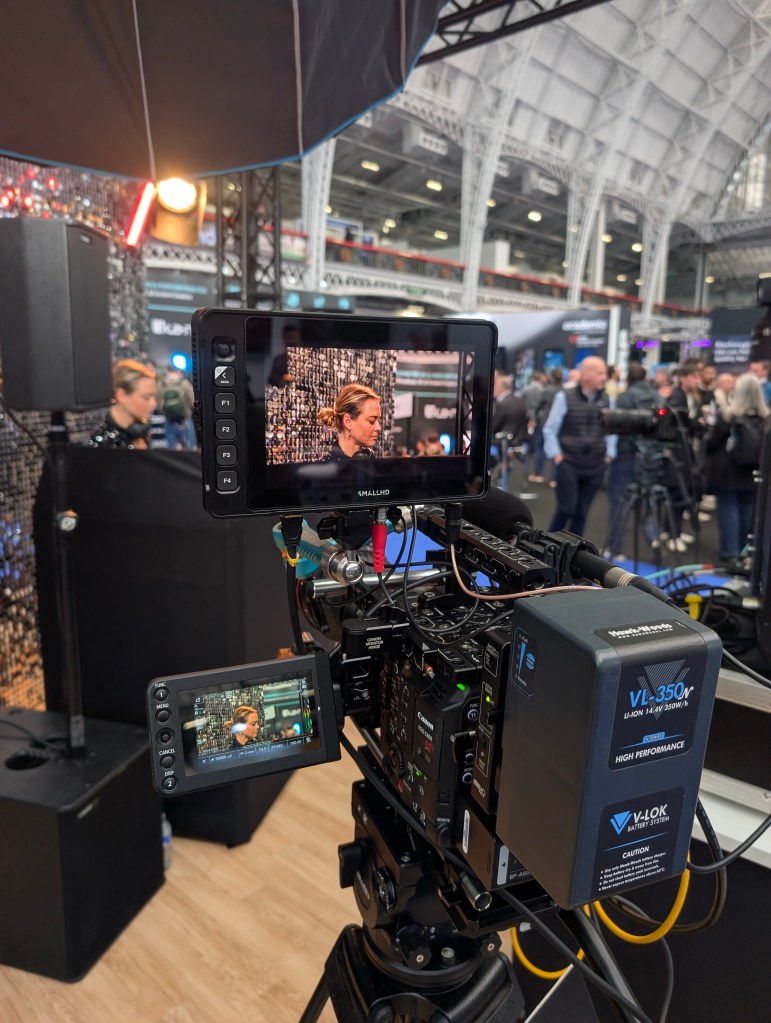
Now everywhere you look – things that used to take forever, are automatic.
At the Media Production and Technology Show in London in May 2026 I was able to take stock of some of these changes.
What is becoming clear is that much of the drudge work is going out of media production. Examples include:
- Cataloguing rushes: New smart features in (for example) Da Vinci Resolve 21, will create smart bins of all shots in a project containing, say, cars or an identified person.
- Editing multi-camera shoots: more automated features in the same software will keep the camera on the speaker though a long interview, giving you a pretty good first edit of a podcast in seconds.
- Correcting dialogue: Descript will clone a voice, allowing you to correct mis-spoken or badly delivered words. This avoids the need to re-record dialogue.
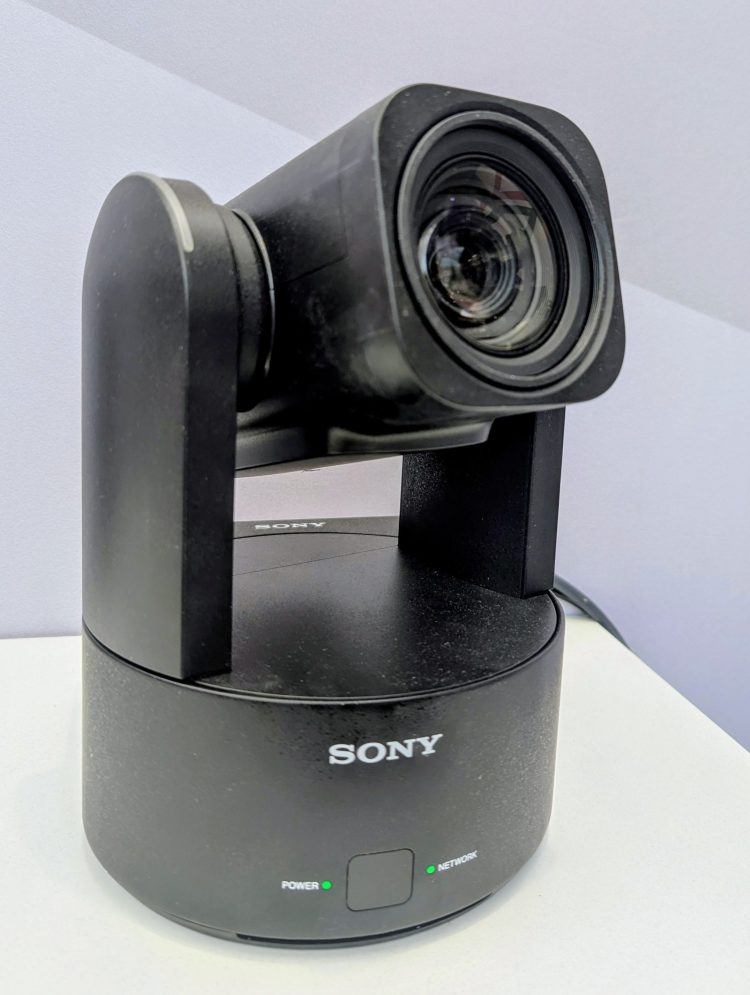
- Cameras: The Sony AM7 (pictured) can be set to track the ball throughout a basketball match. Other sports coming soon!
The quality might not be Hollywood grade. But it will be a very good first step for most digital producers.
The march of AI, though, is going beyond repetitive tasks and into the realm of storytelling.
“Creatives will not be paid for their labour. They will be paid for their judgement.”
You really see the power of AI really when you work across different platforms.
For example, take your interview transcripts out of your edit software, and then feed them into an LLM. Bingo, you can create a script, or at the very least, a list of the best clips which you can then order into a script.
It’s then a relatively quick job for anyone with basic editing skills to pull a story together.
So, is the creative industry about to be automated out of existence? I don’t think so.
For a start – only you (not the AI) will be able to mix clips, pictures and music to get the best emotional response from the viewer. (If you don’t believe me try one of the many AIs that make whole films from prompts. They are terrible!)

Eran Stern, speaking at MPTS, said that creatives will not be paid for their labour. They will be paid for their judgement.
What he means here is that humans have to intercede to decide if the AI has done a good (enough) job.
Yes – AI can tell stories, create images and videos, and reversion anything into anything else. (Listen to my AI podcast here)
But it doesn’t judge. It churns out “slop”. And it’s our job to turn that into something brilliant.
Even in the content sewers of social media, you will have to be a better creator than ever to rise above the ceaseless flow of AI generated rubbish.
You won’t need years of practice on After Effects to make brilliant content. But you will need vision, judgement, and patience to create (or generate) the hit media of the future.
- At Rough Cut Media we continually update our courses and production practices to reflect the latest developments in AI.