
AI can be used to tell powerful powerful, real-world, documentary-style stories without compromising viewer trust.
In this blog I’m going to go through an example of a video which I brought to life with the help of AI tools.
This project demonstrated two vital uses for AI:
- Creating reconstructions of past events without the budget for actors and locations
- Overcoming copyright problems
Sal’s Story
The story was hugely powerful. Sal was a survivor of unimaginable abuse as a child, and went on to have some dreadful experiences as a young woman.
In particular, she’d been sent to a secure mental asylum at the age of 10, and then later, taken in to care. At age 18 she was set up in a flat by herself – and entered a series of abusive relationships.
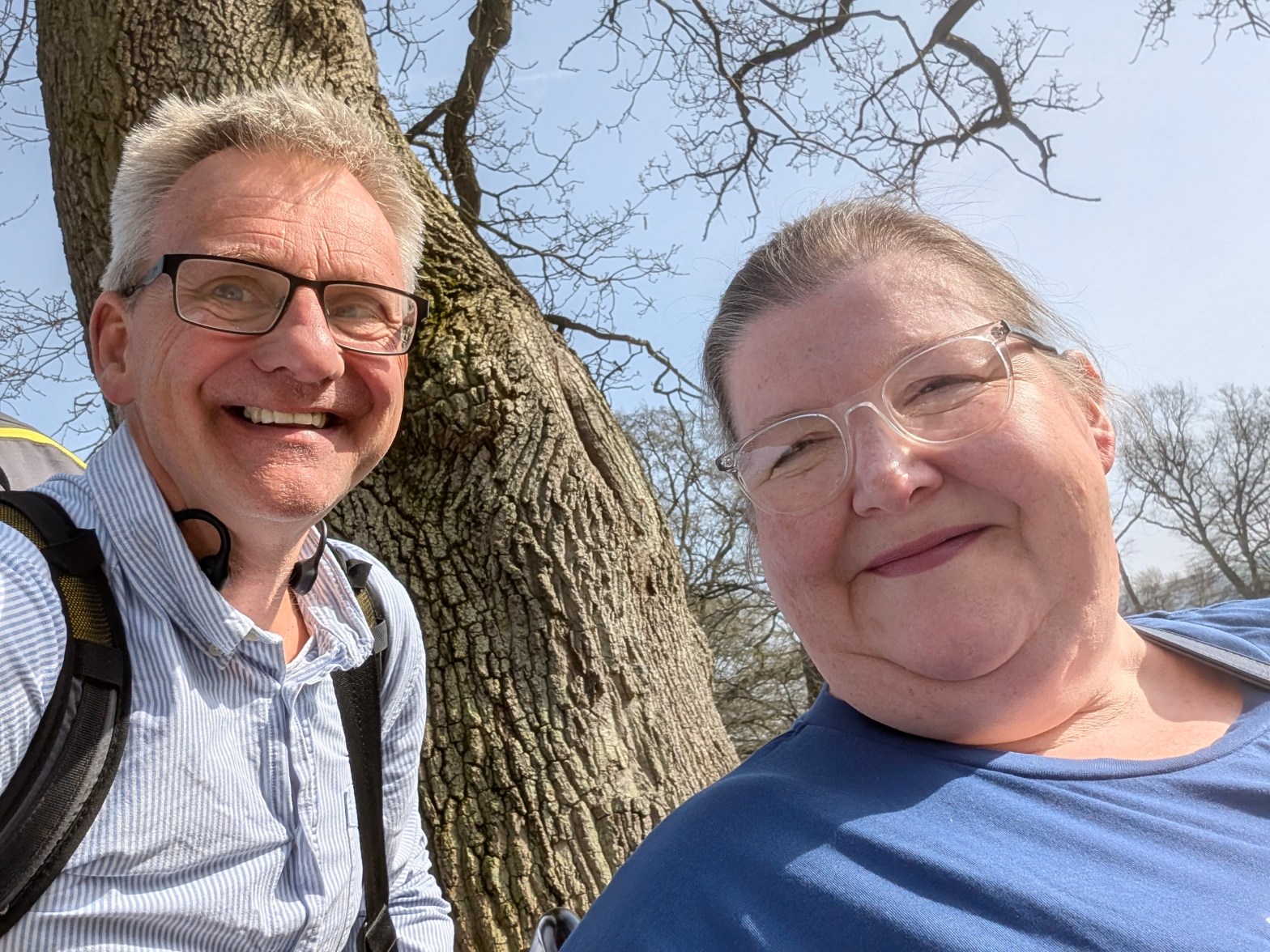
Sal told her story clearly and bravely, and was incredibly patient as I filmed her at home and while she travelled around her local area in her wheelchair.
I filmed classic “setup” shots. She worked on her phone at home – illustrating her campaigning work. And she went around her hometown, showing her in a sympathetic, natural environment.
But there were important elements for which there were no pictures.
A starting point for many stories about childhood trauma would be old photos. But nobody took picturess of Sal when she was growing up. I needed another tactic.
Reconstruction
In this kind of situation, film makers very often resort to reconstruction. But that takes time – and budget. I had neither.
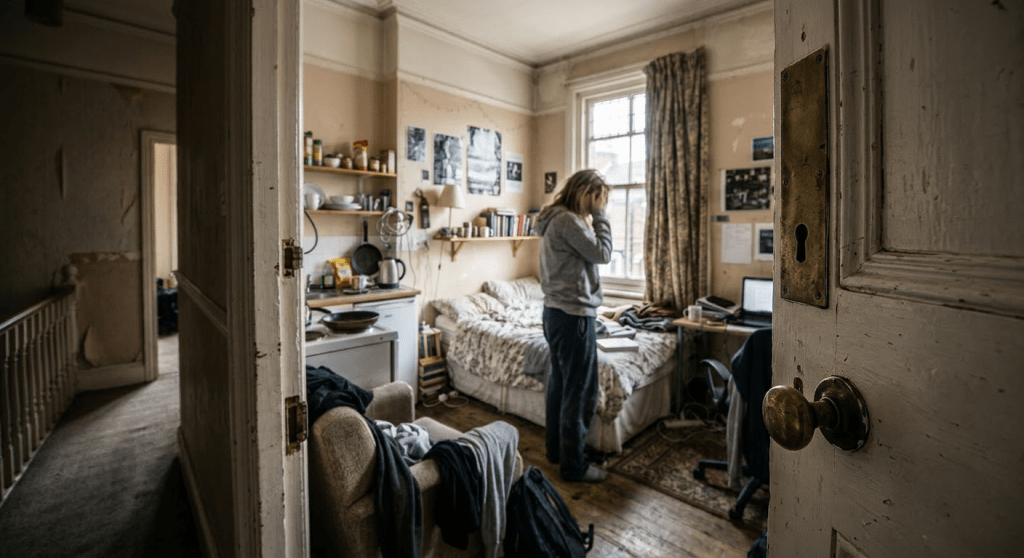
So, instead of reconstructing abstract scenes of a young woman in a care home with actors, I generated the pictures on Runway – a leading tool for generating AI images and videos.
I thought through the process I would have used in filming a real-life reconstruction, and applied it to the AI generations. Maybe the young woman is in the background, blurred. An object in the foreground in focus.
Maybe, for the bedsit years, a wide shot of a scruffy room, with just the back of a young woman in vision.
With AI’s habit of creating unsuitable, sexualised images of young women, it wasn’t easy to get Runway to get something usable. But after several generations and tweaked prompts, I managed it.
There are of course, ethical issues and trust issues here, which I discuss below.
Copyright
Copyright is another area where AI can help us.
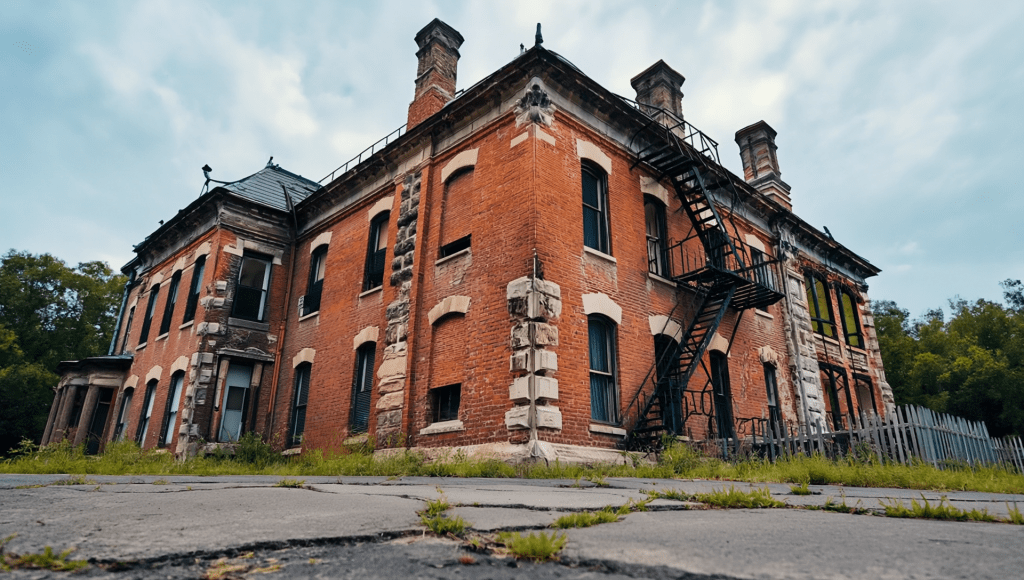
I did find pictures online of the now derelict asylum where Sal was sent as a 10-year-old girl. But I could not get the owners’s permission to use them.
I therefore got Google’s Gemini LLM to generate a description of the pictures in text. I then used that description as a prompt in Runway and got it to generate images of something similar to the asylum.
It took a few tries and some rewriting of the prompt, but I finally generated images and videos that gave viewers, at the very least, an impression of the place where Sal was taken.
I do realise that there are copyright risks in feeding the images into an AI, and to be safer I could have written a description myself. That might have been a difficult and time-consuming task, and I felt the risks were minimised by the level of human intervention and the number of stages in the process.
Editorial Integrity – Ethics and Trust
Of course, it would be dishonest to viewers to pretend that these were actual pictures of the asylum, or real pictures of Sal as a young woman.
All organisations – particularly charities – work hard to earn the trust of their supporters. It’s easily broken, and dishonest communication is a surefire way of doing this.
So I was honest. I clearly marked the pictures as “reconstruction”. This is a basic trust issue, demanded by most ethical filmmakers and by broadcasters.
We had generated pictures to conjure an image of Sal’s environment to increase the immediacy and impact of her story. But we were, at the same time, honest and truthful.
I considered labelling the video AI Reconstruction. However, I didn’t feel that was important. It was a scene generated to create atmosphere – not real historic footage. Does it matter if it used an actor of a GenAI platform? I didn’t think so. But I’d be interested to hear differing views.
Conclusion
Many third sector organisations struggle with the concept of using AI for storytelling.
They fear it will cloud audience trust, or that they could be accused of being misleading supporters.
But I think I have demonstrated here that, used openly and responsibly, it can really enhance storytelling. It can make a strong story even more powerful – with no impact on trust.
I was moved by Sal’s story and wanted to tell it in the best way I could.
Generations of documentary film makers have reconstructed scenes in their films for the same reasons I used AI.
In this case, though, hiring actors and setting up suitable locations would have more than doubled the cost of the shoot. For a few seconds of footage, I couldn’t really use clients’ money in that way.
I believe AI, used openly and responsibly, is a powerful tool for enhancing storytelling, without using too many precious resources.

